Wednesday, April 15, 2009

Podcast Interview with Moi

I took part in a rather enjoyable informal chat with the host of ThaDarksideVibe podcast, Troy Foreman to chat about Millennium and BacktFrankBlack. It was an Easter Monday affair and I must confess to not being on the ball as I should. Naturally I'll blame my infamous dodgy memory (as those who know me can attest to), and my recent drug addled recuperation from my wisdom tooth extraction (which those who know me will attest I stopped taking the pills earlier this weekend and expose this bogus excuse).

Either way, we myself and Troy have a good 45 minute natter across the seas on the subject of Millennium. We're looking at the possibility of working with Troy again on a podcast dedicated to BacktoFrankBlack - time will tell whether that idea comes to fruition.

I'm talking to horror magazine Rue Morgue on doing a small feature on the campaign along with Lance Henriksen. Again, early stages - for those who wanted to hear what I think without actually having to hear me. I understand such a perspective totally - you have my sympathy! In the meantime, support Troy's podcast and suffer my dulcet tones on the following direct MP3 link!

Download the podcast directly (MP3)
Visit ThaDarksideVibe

Monday, April 13, 2009

BacktoFrankBlack offering an X-Files book prize!

BacktoFrankBlack is giving away "The Complete X-Files: A guide to the Myth and the Movies"
by Matt Hurwitz and endorsed by Millennium creator Chris Carter to TWO lucky winners who can offer a humorous caption to the following picture:

Email BacktoFrankBlack.com your suggestion before the end of Friday, (update: they've announced their winner - check their blog!) to win a hardback copy of this fantastic X-Files book! Third place will get a copy of the indie movie Millennium Apocalypse (region 1).

Worth a try, n'est pas?

Click here for BacktoFrankBlack.com's entry terms and conditions

Saturday, April 11, 2009

Doctor Who: Planet of the Dead

Cut to the Chase Meridian : can't say I enjoyed this.

Planet of the Dead is a story that very much relies on the audience falling for the Doctor's one-off companion, Christina (Michelle Ryan). If you didn't fall for this cat-woman homage, there really wasn't much else in the episode to engage you. The other characters (who as usual for RTD, felt authentically British) were relegated to the bus leaving us with Christina and the Doctor - oh and some flies. Hate to sound stuffed with snark, but the flies carried more charm than Christina. Really - they were great!

Cards on the table - I hate sounding like a grumbler, but (and there's always a 'but') can we have a female character that doesn't have to constantly compete with the Doctor for the audience's attention? It seems each companion has to spar with the Doctor to prove they are made of equal awesomez as the 900-year-old Time Lord. When one goes, the next has to come and fill those same shoes. Having the occasional companion look the Doctor in the eye is super - having companions occasionally do this makes that moment stand out more, but it seems each companion or major female guest star has to find a way to do just this. So by the time Christina appears ready to prove how she's not going to be ordered around by a very competent and rather superior being, she's sort of lost the dramatic edge.

I suppose we should blame society and our churlish, sexist social regime that we have to constantly reminds ourselves exists no more by adding aggressive or challenging female role model to buck past trends (which on consideration, isn't exactly a bad thing). It's just in way, this ideology limits the female character types to fulfil the companion role. I mean, men can be charming like Captain Jack, or eccentric like Malcolm (Lee Evans), UNIT's scientific advisor, or just excitable like Adam (Dalek) without having to prove to the Doctor - and through the Doctor, the audience - that they are valid, contemporary role models. In a way, it seems lead female characters are pigeon holed as bolshy and confrontation to prove they are no longer being pigeon holed as weak and submissive. Is there no middle ground?

In fact, I think this episode would have been far better with just the Doctor and the bus load of Ordinary. Yes, the Ordinary were far more likeable, believable and enjoyable to watch than Christina. We had a spectrum of London types and they were all very well played. They rooted the audience in the dilemma very well indeed - unlike Christina's character who was a boob laden pastiche on Bond and Thomas Crown - who just dragged you away from the tension. She was too unbelievable.

What? Unbelievable for a man travelling around time in a police box? Yes, sir - unbelievable. One oddity is something an audience can invest in. We can accept a Doctor, or a James Bond or a Batman. But when they have an equally unbelievable sidekick, who is just as amazing, it starts to become a little farcical.

Strong sidekicks aren't always a 'no' of course - in the right context they can be beneficial to a story in my humble ungodly opinion, but I think the desperation required to sustain the situation in this particular tale required the supporting cast to be believable - and that includes the companion.

I'm sure many people loved this Special - which is great. I'm not here to berate RTD's production (or personal talent) as crikey, they don't half get enough flack from fandom as it is. I just feel I have to be honest and say this didn't fulfil my Doctor Who criteria. But given I'm neither The Family or The Kids - the two key demographics for this story, I'm not the stat type to take priority. I'm just saying as a member of the audience, I found it slow, predictable and, thanks to Ryan's character, slightly cringe worthy. It's a ghastly thing to say when people have worked so hard and I don't mean to smear any of the cast and crew's talent, but it just didn't work for me. Heck, I found Lee Evans Malcolm enjoyable - and he's a gent whose on-screen presence normally drives me to the ceiling (as did his father, Norman Wisdom). I didn't enjoy the lame robbery opening (can we not put Mission: Impossible behind us now?), the barren middle bit (barren for those of us neither lusting or loving Christina and the Doctor's dynamic) or the triumphant ending (that felt smug and superfluous). Though I have to say the portents of things to come were very exciting - matched with a wonderful shot of brooding Tennant.

So a little disappointed. I'm a big fan of the New Who productions, so if you are just reading this blog on a random web-surf, don't mistake me as someone who generally whine about the show (yet persists in watching it so they can whine some more). Loved the last season so perhaps I just don't do Easter Specials! And for the first time, I have to say I really didn't enjoy Gold's soundtrack - dear lord, I've fallen right off the Who bandwagon this time. Someone hoist me back up.

Well. Thirty minutes and its Red Dwarf. Let's see if the night continues this trend. I hope not!

EDIT: Who writer Lawrence Miles has far more to say on this topic and more candidly. Have to say I find myself agreeing with his points and feeling utterly awful for doing so.

Thursday, April 09, 2009

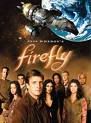
Cancelled too soon: Firefly, meet Millennium.

Those who regularly suffer this output will be aware of the campaign I keep pushing for the return of Millennium's Frank Black. Others may have equally suffered my recent twabber (a jabbering monologue as vacuous as twitter but with no word limit) on Battlestar Galactica. Some poor fools will have suffered both.

Well rest assured, the tippity, tappity, tuttery tick of my fingers against keys translates to a topic devoid of Cylons or Legion.

Well, almost anyway.

A neat, uncomfortable wisdom tooth extraction has lead to two vital occurrences this very week. The first is the increased necessity for painkillers, resulting in some wobbling and sleeping, the other is a marathon viewing of Whedon's Firefly show, its sequel Serenity and the comic book segue Those Left Behind. For those who aren't familiar with the show - bloody well go and get all manner of familiar with it. It's essentially the daily life of Han Solo with a more glib and earthy penmanship; a gang of mercenaries who struggle to survive in the outer edges of a solar system inside their much loved bucket of bolts, Serenity.

In some respects, Millennium and Firefly suffered juxtaposing ailments. The former got three brimming, excellent seasons but was robbed a satisfying resolution, while the latter was robbed of more than half a season but got a wonderful epic conclusion. Put the two together and you'd have the most righteous slice of television brilliance known to man since, well, Battlestar Galactica.

That being said, perhaps what makes Firefly so great is that it is short. Thirteen stories plus a film. In some ways it seems grossly unfair that it was cut off so early - even with the fortunate luxury of a feature film, this show had so much to say, but one could equally say that thirteen tales is enough for most forms of storytelling. We're never bummed out Hamlet never got a sequel or that Frodo didn't manage to showcase his exploits beyond Middle Earth. We don't get upset that Stoker didn't pen ten odd more encounters with Dracula. When all said and done, a book series that managed to whip out thirteen tales would be considered most generous - possibily even excessive.

But with television, we want more. Arguably this is understandable - we look to Firefly as a serial, we look to Macbeth as a single tale. With books, the time it can take to read a single good novel thoroughly you could have watched a good few episodes of a TV show. Three quarters of an hour isn't that long when it comes to storytelling - and that's our standard television serial format.

However, we don't look to serialised films with such a warm grace. Naturally there are factors which made film a whole different pot of ingredients, but whatever the factors that make a franchise of film often weaker than a single outing, the fact is we don't appear to look at ten odd hours of storytelling on television as a bigger enough investigation of a particular universe - or in Firefly's case, a particular 'verse.

The obvious answer is the basis of comparison. I'm not a fan of Stargate - as a genre comparison - and yet it has gone on and on and on. Whoopie for its fans, but for those of us who didn't find pleasure in the show and have watched shows that were pleasurable drop by the wayside, its understandable that we speculate to what Firefly could have had.

But then I have to remind myself - of those who did manage to get what Stargate had (or at least more than half a season) and see what happened to those shows as a result. Did longevity eat into the show's quality and thereby its legacy? It's an age old question - do you suffer the inevitable duds of a longer show for the sake of the gems that might be cut? Or do you simply enjoy the short and sweet of a single, well crafted season?

Invariably, as with all things from my gob, the answer is somewhere in the middle. I can't think of any show that lasted any more than five seasons that hasn't shown a dip in quality. Likewise, I can think of many shows which had potential that you knew was present but was never had the opportunity to prove it. Knowing Whedon's talent and the sheer craft of Firefly's 'verse, I'm sure the show had much to prove. Wouldn't it be great to swap over DVDs with an alternate universe - show a world which had five seasons of Firefly Serenity film and for them to show us their four extra boxsets? I'm sure they'd be as fascinated in Serenity's quick wrap as we would be in their extended franchise.

In the end, I know I would have happily suffered some duds for more Firefly, just as I am happy suffering Thirteen Years Later in Millennium for the sake of over fifty episodes, but if I was honestly rational with myself, I'd say that Firefly is like reading a book while Millennium will always remain a unfinished project (unless we can do something about that - see backtofrankblack.com). For all the potential Whedon's show lost, it had something so special that is so much missed from Millennium - it had an ending. Okay, not a definitive ending (Whedon wasn't that dumb), but the film it got gave the show closure the series never could offer. That closure is important. I can watch Firefly, enjoy the variety in stories, the colour of the characters and the wonderful workmanship of its world safe in the knowledge that like a good book - like all good things - it has an end that will satisfy. I can enjoy the episodes without looking at the clock knowing I'm getting closer to being ripped away from the story, its tale unfinished.

With Firefly/Serentity we have a beginning, middle and end - thanks to the film's focus on the River's arc. The show opens on Simon and River's début on ship, we watch the crew and passengers adapt to their new dynamic and it finishes with this family actually making a difference - whether that difference is long-lasting we don't know, but that doesn't matter. The show has been giving meaning by the significance of its final outing.

Of course there may be more from Firefly in the future. With the commerce of cult being so unpredictable these days, its never too late for a return (look at Red Dwarf, brand new back on TV tomorrow for the first time in over a decade - and given then ending of the last season, in need of a return). If there isn't, I'm good with that. For me, Firefly/Serenity make the book - I'm not desperate for a sequel. But with Millennium, well, that's a different story. That show needs an end.

Hell, every show needs an end of some sort - but there are a few quality shows in particular that need it more than others. I'm forever grateful to Firefly's fandom for pushing so we got some form of closure on that wonderful show. I'm just hoping that Millennium might have the chance of the same.

Thursday, April 02, 2009

Illusions of Truth: Storytelling in Battlestar Galactica

Just to add to my lengthy commentary on the finale of Battlestar Galactica, a tweet from Amazo Paul Cornell took me a wonderful collection of comments about BSG from established writers and journalists. Each author offers his reaction to the finale and ponders where they'd have taken the show if they were the creative mastermind behind it. Some polarised views there, but one strand of thinking is prevalent throughout - and that's the problems in writing a show with a fluid future; where nothing is set and everything is in flux.

I think this is a particular problem with BSG given the show states from the start that - within its fictional universe - the enemy "has a plan". This infers the storyteller has conceived a concise narrative prior to the story when in the case of Battlestar Galactica, it does not.

There is no doubt that while a pre-constructed formula to any story is technically constrictive and unbending to new ideas, but for an audience it carries a comfortable hierarchy with the storyteller - we like to feel a world is real even if its conceived, and our brains prefer that conception to have been molded before we embark on a tale. Bottomline, we like to be lead on a journey rather than taking the journey hand in hand. We prefer the storyteller to have control of the whole experience rather than in the case of BSG (or at least to some extent), a pawn to the eddies created by the story.

A rather general overview I admit - particularly in the aspersions to the BSG creative process which, to little surprise, I played no part in. Speaking generally again, a clear benefit of a a fluid storyline is the ability to expand and contract on what works and what doesn't as the story grows. Furthermore, the creative process is exciting and dynamic - it can respond to the notions and ideas of the audience and shift, staying one step ahead. So I'm certainly not berating such an approach to storytelling. If we look at BSG again, the shifts in season three seem to me to very much be based on where the show has been and an effort to find places it hasn't - and I think New Caprica and the Final Five were a brilliant way to re-engage the audience after two seasons. I think this is the strength of fluid storytelling - it allows the story maker to let the show progress at its own pace rather than a preplanned one. I recall RDM saying he was happy bringing the show to an end after four rather than five seasons because he felt the show had naturally covered its ground quicker than they'd anticipated.

Equally, while I'm not looking to berate the fluid approach, I'm not looking to champion structure. Look at Babylon 5, when the show was uncertain whether it would get its year 5 on its pre-planned arc, it was forced to compress the structured storyline into one season leaving season four feeling overtly compressed with two major cumulative wars and season five rather vacuous.

I would say the best work (as with all things) finds a middle ground, one where the storyteller has a plan and his willing to reinvent it if needs be. With Moore's show, I think that middleground is lost. Certainly they seemed to have a flavour of what's to come, but I felt in season four that some of the resolutions didn't match the notions that presented them. And one can't help feel that when you walk the fluid path, you let the show help dictate the outcome more than pre-formed structure. In other words, you create the impact then worry about the aftermath when it comes time and in the interim watch the story flow carefully letting that help inform the creative process.

That all being said, I think many of the critics in the linked page are overtly critical, forgetting that the niggles are not what BSG was about - it was about characters (which arguably is the opposite of Moore's previous work on Star Trek which was infamous for technobabble and crossing its tees). So I think certain fixations in the responses to BSG are unfair and largely irrelevant. Those who wanted a big expose on the Head Six or Starbuck's mystery should have sensibly seen that such ethereal revelations would be tonally impossible. The show was never about definitives and like life, tried to keep things grey. There was never going to be big explanations aside from one: God Moves In Mysterious Ways.

And I like that. The ambiguity and almost arbitrary love/hate the universe has for its souls, and the process it leads them is as inconclusive and as uncertain as theology has painted in a dozen cultures. How often as the Lord in the Old Testament acted in a way that for an omnipotent being been considered rather elaborate or needlessly pedestrian. Why did God put that particular fruit tree in Eden? Why did he seem surprised when Man took a bite from his fruit? Why was he not aware of the serpent's plans? He's omnipotent isn't he? And like theology, BSG's higher powers work in odd unexplained ways. Starbuck's narrative journey is extremely non-sensical (as Saxon points out in the article), but that seems very theological to me. From my understanding, gods in most religions rarely move directly from A to B, but prefer a more colourful and memorable route.

But I guess the real crux of these negative comments isn't whether as an audience we can "buy" these explanations, but a resentment to knowing they were never planned and as such we wonder whether there was the opportunity to do something better.

I think people are open to improvised storytelling - I'm certainly not against the medium, but I think unfortunately Moore's candid remarks on the fluid approach to the show worked against the show itself. His professional honesty was both commendable and insightful but practically it did damage the credibility of the story itself. For example, I thought some of the choices for the Final Five were very clever when the finale to season three aired. We'd seen Tyrol's connection to Boomer, his irrational fear of being a Cylon exposed with Brother Cavel and his instincts bringing him to the Temple of the Five. As soon as I discovered than none of that was planned to lead us to him being a Cylon, but was retrospective in its decision, the twist lost its impact. I still loved the twist and the impact of the revelation, but it did lose some of its sparkle. I guess we can cope with being hoodwinked by the mysteries of the narrative - in fact its what we watch for; we enjoy the anticipation of the big reveal. But we don't enjoy being hoodwinked by the smart retrospective eye of the writers - despite the fact it presents a different and no less impressive approach to creative writing. Both approaches look to find creative solutions to creative problems. Both approaches are manipulative in intent, but one we find it easier to stomach one technique over another.

Overall this approach never truly spoilt the show for me. After all, however they resolved the Final Five, that scene when the five were revealed will always be magical. And given the mandate of any television serial is to entertain in the moment and not to create perfect continuity nor even a perfect seamless serial, I think BSG was wise to involve fluidity into its process.

After all, audiences look more and more for story arcs within their television, yet the industry remains ever cutthroat to dips in performance. Maybe fluidity is the key to keeping a show relevant, adaptive and thereby responsive to its viewers. Maybe by on-the-spot tailoring of a show's masterplan will the epic remain relevant. While Babylon 5 managed to luck out on five seasons, it could be considered the success was a commercial fluke against the many odds. Perhaps BSG's successes and failures mark the future of epic fictional television storywriting. Pitching a show with a five year arc is not going to woo any investor, but pitching a show where your long term arc is as expansive as the viewing figures dictate - that sounds like the future of television and I look forward to seeing new shows build on BSG successes and failures just as BSG did on the sci-fi epic success of Babylon 5. The future is indeed, bright.