Wednesday, May 24, 2006

REVIEW: Every Cloud Has A Silver Lining: "Final Fantasy: Advent Children"

[Review written for Toon Zone News: 05-13-2006

Final Fantasy: Advent Children—it's been a long time coming. Finally, the fantasy has become reality. It's here.

Excuse the awesomely pretentious introduction, but I must confess, I am a massive fan of Final Fantasy VII and I never believed we’d ever get to see a sequel. Nevertheless, please don't let these trembling hands holding this DVD case put you off; making any product for an already blooming fan audience can be as much a curse as a blessing.
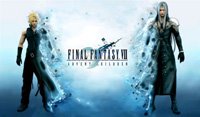
In over twenty-five years of game playing, I rank the seventh adventure in Square's Final Fantasy Video RPG series as the best game experience I've ever had.

And I've had a few.

For those who live akin to a severed head until eighteen inches of solid metal, let me explain a little of the background to this release.

Final Fantasy VII was the first 3D RPG adventure in the Final Fantasy series. Its shift from its long term home at Nintendo to Sony’s new spangled Playstation was controversial with fans. Square felt the Playstation would give them more technical scope to fulfill their project. On top of that, the Playstation opened up Final Fantasy to a whole new market. Final Fantasy VII was a mainstream success. Role Playing Games were suddenly cool. Well, cooler than they used to be.

The game was a brilliant mix of intricate plot, likeable characters and a solidly paced story, all wrapped around a game packed with turn based battles and a multitude of sub adventures. While the story was extremely linear, there were enough secrets, twists, subplots and extra characters to make the game feel as if the whole Final Fantasy world was open to the player.

And this was Advent Children’s biggest hurdle.

How could Final Fantasy: Advent Children live up to a sixty plus hour interactive game experience? How could the DVD film release appeal to a mainstream and fan market, broadly separated out by a video experience that lasted for over three solid days? Appeasing the fans without confusing the casual watcher would require a stroke of genius.

And more or less, that's what you have. By magic, this film pulls a rabbit out of the hat for the mainstream market and a Moogle for the fans.

The story is set two years after the events of the 1997 hit game. Without even attempting to explain the end of the game—a controversy that fans worldwide have been chewing each other out for many years—SquareEnix brings the characters back in a movie where humanity is on the brink of a new age. The days of industry choking the planet of its life essence are long gone. The mighty villain Sephiroth was defeated at the hands of our dysfunctional band of heroes lead by Cloud Strife and humanity is still picking up the pieces.

But things aren't all good. There is a disease called Geostigma attacking the population that is intrinsically linked to the event of two years past. There is a new band of silver haired youngsters, powerful and focused, with an agenda against the planet as well as its people. In-between these two mighty threats to mankind, there is Cloud Strife, warrior-come-angst-filled delivery boy struggling to accept his place in the world.

So how does it all come together in two hours? Pretty well. As a sequel to a complicated story, I didn't think there would be any attempts to try and explain the premise to new audiences, yet the introduction does a fairly good job of this.

The plot and the story remains fairly firmly fixed around Cloud rather than the whole Final Fantasy VII crew. This was probably a wise decision since there is so much potential backstory to each character and their relationships to each other. The film decides discretion is the better part of valour and keeps the show very Cloud orientated.
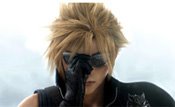
This may disappoint some fans, eager to see what Cid is up to now or what mischief Yuffie's been creating, but from a cinematic perspective, this was a wise call. This is a film after all, and the production has gone to great lengths to make sure that it works just as that.

That's not to say it isn't fan friendly—far from it. The crew does all make an appearance, as do the massively popular Turks, specifically Rude and Reno. These two Turks are used primarily for comic relief and thereby pop up fairly frequently. It's astounding how these two guys have become so popular with fans. In fact, Reno and Rude actually get more screen time than Barret or Cid.

To the fan boys’ delight, a host of motifs, visual and aural, from the game have been woven into the plot. Some are obvious, and some not so. For instance, the victory theme pops up as a cell phone ring at the end of one skirmish. On a superficial level, the production hasn't forgotten to keep tickling their fans.

For fans, the beauty of this film is that it does indeed answer some questions, but doesn't attempt to answer all of them. In the Final Fantasy VII video game, there wasn't just a great deal open to interpretation, some events were based solely on what the player did. As such, the interpretation of the characters can differ from game to game. As an example, there is a great debate among fans as to whom Cloud was in love with—if he was in love at all. The choices made in the game do generate a slightly different angle on the character relationships. Was Cloud in love with Tifa, his childhood sweetheart, or was it Aerith, the pretty little flower girl he encountered? In Final Fantasy: Advent Children, it's left as an ambiguous subject and wisely so considering the fervent loyalty of fans to both Tifa and Aerith. In reference to this, there is a line uttered by Cloud that seems as much aimed at fans as it was the villain. He points out that doesn’t have to choose who he cares for, because in fact, he cares for all.

So this cautious simplicity to the film's background works in its favour. It doesn’t try and be the game that spawned it. It doesn't try and adopt the same depth and complexity the game had room to create. Nevertheless, Advent Children does carry on the themes of self-enlightenment, friendship and guilt—just as the game did. It has the flavour of the Final Fantasy VII world as it attempts to mimic the audience's experiences.

The music, of course, is a fan must, with Final Fantasy VII composer Nobuo Uematsu back at the helm. For Final Fantasy: Advent Children, there is a mix of music old and new. Some of the fan favourites have been rearranged and some new original pieces have been included. You'll find a mix of subtle motifs and ‘in your face’ riffs that are bound to bring more than a few waves of nostalgia for fans. I'm still not sure the new arrangement of “One Winged Angel” is quite as successful a hybrid of classic and rock that the composer himself believes, but it still remains a deeply enjoyable aural experience when accompanied by the film’s stunning visuals.

I must say I had no problem with the overall US vocal dub. It was tight enough and the vocal performances fit the characters—or at least as to how I envisaged them. While I always prefer a subtitled film to a dubbed one, it's quite worth running the dub track just so you can spend the time gazing at the amazing visuals rather than reading the subtitles.

Yes, the visuals are superb. It sits deftly on the line between looking real and looking animated. That was the film’s intent and that’s its success. I could wax on about the visuals but I think it's both in your interest and my own type worn fingers if you just go and watch one of the trailers from the official site.

Are there any grumbles? Well naturally, nothing is perfect. The final battle is too long with no breaks and there could have been a little more character interplay in the second half. Occasionally the script gives way to the eye candy and one feels there could have been perhaps a slightly stronger balance.

Personally, and probably a lot to ask, I would liked to have seen a little more outside Midgar and its new boundary town, the Edge. Final Fantasy VII was about exploration, and a little more traveling would have been nice. Probably not a practical request, but nevertheless I did feel I was somehow missing out on the rich and broad world Final Fantasy VII had created.

For the casual viewer, I think the story has the right balance of being solid enough to hold the audience’s interest, yet cryptic enough so they will be asking the right questions after the movie. Beyond the story, the action is thick, fast and ludicrous. As you watch some of the heroes fighting, you can't help but be amused by the total disregard of physics. This film puts fun before physics, so far that even the most intense science fan has to give up analysing it and just watch it for the kicks. The only downside is that the mix of battles is a little uneven. More isn’t always better and when there are too many fights, the complexity and rendering is lost as the charm dissipates.

For the more intellectual watcher, there is a fair bit of symbolism and as with the best stories, the audience isn't spoon-fed. Western films do have a tendency to explain every plot point; as if the production has to justify every single plot point to its audience. This trait is not present in Advent Children. There are areas of the story you’ll just have to work out for yourself. Some may call them plot holes, but in my experience, Japanese films seem a little less conscious of having to offer unnecessary explanations to appease picky viewers. Overall, there's enough action, humour and character to make Final Fantasy: Advent Children watchable to all, however, the more you know about the universe of Final Fantasy VII, the richer the experience will be.

The special edition disk isn’t too shabby, but not overly packed. There is a montage of Final Fantasy VII moments on disk one that picks up the many pieces of story from the game. Don’t expect this to help any new viewers—it will simply confuse them further. On disk two there is a fairly long documentary about the making of Advent Children, footage from the Venice film festival, some trailers and eleven deleted scenes. The deleted scenes are more like deleted snippets, mainly from the film’s fight sequences. Aside from a couple of character-based entries, the deleted scenes are rather uninspiring.

In my opinion, the most vital key to this movie's success was how it reflects on the original game. Fans worldwide would have despaired if the film had in anyway rewritten or diluted the original game experience through its new storyline. Fans can rest assured this film plays careful and honest respect to the game while trying to strike out as something different.

How different Advent Children is in context to its cinematic qualities is debatable. Certainly a fun and stunning performance, pushing computer technology to its current limit, but neither its script or flavour offer anything cinematically mind-blowing. . You’ll see elements of The Matrix/Crouching Tiger Hidden Dragon around virtually every corner and while the original musical score is intertwined with an interesting mix of rock, the electric guitar qualities to the arrangements are hardly original. Furthermore, I’d be surprised if the story twists genuinely surprised any fans. While the film comes across as well written, it is fairly predictable.

Considering this is very much a fan orientated project, I’m surprised the DVD isn’t jam packed with extras, but this doesn’t stop Final Fantasy: Advent Children from being a worthwhile addition to anyone’s DVD collection. Advent Children is a solid film and it’s good to see a video game make that media translation. While its storyline won’t blow anyone away, it certainly doesn’t disrespect the original premise or damage the film as a whole. The whole production treats Final Fantasy VII with respect and doesn’t come across as a fast buck knock out as some detractors have labeled it. In the end, it’s definitely a positive addition to the world of Final Fantasy VII and certainly a film no Final Fantasy fan can afford to miss.

REVIEW: Doctor Who - Age Of Steel

[Review written for Gallifrey One: Spring 2006]

Part two of the New Series’ mirror universe Cybermen saga . Will the contrived inclusion of Mickey and Rose’s parallel bloodlings continue to hamper the otherwise strong return of the metal monsters? Can Rose get any more irritating? Will Robocop sue? All will be revealed in this week’s exciting episode!

“Age Of Steel” is far superior to it’s opening episode, “Rise Of The Cybermen”. “Rise Of The Cybermen” was a rather mixed bag being a stylistic attempt to recapture the classic Doctor Who ambience. The result was a story that fans seemed to utterly love or totally hate. It seems more likely that “Age Of Steel” will be less divisive to Doctor Who fandom yet retaining the retro dramatic elements of it’s previous instalment.

The cliff-hanger resolution to “Rise Of The Cybermen” had the Doctor and posse surrounded by some rather delete frenzied Cyber troops. The outcome is indeed unforeseen - very much a “blink and you’ll miss it” solution. I wasn’t over keen on this scene. The Doctor’s shock offensive is satisfying, but it does wipe out the surrounding Cybermen a little too quickly. It just seems a little early in the Cybermen debut to see them dispersed out in one brisk action. It would have been nice to see them remain an invincible threat a little longer. The scene just diminishes their presence before the episode has chance to start.

Nevertheless, the script for “Age Of Steel” is far better to the rather plot burdened forerunner. The dialogue in Ricky's van is fast and furious offering elements of humour, plot and drama. It certainly picks the story up and moves it into a new gear as the Doctor starts to take the offensive. I’m glad they took the time to explain Ricky's “London’s most wanted man” stigma - and with a nice slice of humour to boot. Again, Noel Clarke is truly on form in this story.

From here on in there is a lot of monsters chasing heroes and it all works fairly well. The uniform motion of these hoards of Cybermen is effectively staged and is indeed a fun, nostalgic trek down memory lane to all the “run from the slow moving monsters” of the old series.

We also get a glutton of death that is very Doctor Who. The death of Ricky isn’t that surprising, but the scene does give the audience pause to wonder if it was actually Mickey who died. After Adric’s demise in “Earthshock” there seemed to be a possibility Mickey’s fate would be similarly sealed in this tale.

However, while the story certainly moves forward in terms of pace, tension and drama, it does seem to lose a little coherency in the plot. When writing a retro story, there is a fine line between capturing the spirit of the old concept and slipping into it’s nostalgic failings. It’s the difference between being retro friendly and, well, retro naff. Pulling the TARDIS through a random and never explained rip in time is very series retro. Running around London under the threat of the Cybermen is again, very series retro. Sneaking into the enemy stronghold by pretending to be an emotionless drone seems ill fitting in these more technologically aware times. You would think Cybermen would have some sort of motion sensors that would be a little more adept at catching two people sneaking into line, or at least, using dummy Earpods, but like classic dummy monsters, they seem blissfully unaware of these none too sneaky trespassers. It makes for dramatic tension, but as a plot movement, it’s rather uninspiring and the Cybermen become a little less threatening. These aren’t plot holes I’m complaining about - there is no limit to the possibilities why anything happens in fiction - but in the context of this story, some plot directions feel like tired formula.

I’m certainly a little confused as to why the Jackie Cyberman would take Peter and Rose to the leader. Peter does have a connection to Lumic - fair enough - but why Rose? Maybe as the viewer you can conjure a good reason, but on screen it just comes across as ill thought out.

However, such plot creaks are fairly well camouflaged by the injection of the emotional drama that was slightly amiss in “Rise Of The Cybermen”. The Jackie Cyberman itself was a surprise. I must confess to being fooled by last week’s ending - I thought Jackie was the secret spy Gemini and her escape into the cellar was not the planned move I anticipated, but a desperate gambit. Having her pop back into the story half way through as a Cyberman is truly chilling.

Another minor gripe is how quickly Lumic and Crane are despatched - particularly Crane who had a lot of potential. Nevertheless their final scene - fairly early on in the story - is a good bit of character resolution. Indeed Lumic does return, but he lacks that megalomaniac presence in cyberform.

Grumbles continue I’m afraid with Mickey and Jake’s attack on the Zeppelin. The single two guards seems tediously formula - again a throwback to old Who which simply creaks noisily here. At least the moment is juxtaposed by an beautifully claustrophobic scene with the Doctor and Mrs Moore wedged in tunnel of brick and Cybermen.

This is the problem with “Age of Steel”. When it’s good, it’s very good; mixing classic Who with contemporary drama, but when it hits an off note, it really resonates. Another painful blend of formula and the technology archaic is Mickey hacking into the Cyber computer. Yes he’s hacked into computer’s on his Earth, but using a keyboard to hack into a system owned by the most powerful man in Britain in minutes feels laboured, old hat and totally out of date. It’s a very poor piece of plot driving. On the upside, this wooden scene is countered by the traumatic revelation of how human the Cybermen actually are. This was a nice reworking of the Cybermyth and certainly a candidate to become a classic Who scene.

And the finale? Well again, a mixed bag. Cyber Controller is revealed in his grandeur, as is his ridiculously oversized and pipey chair. Quite why Cyber Controller requires a seat let alone a pipey one is a slightly beyond me, as is his eternal patience as the Doctor waxes philosophy and then cunningly rambles in blatant code to an eavesdropping Mickey. Tennant dominates the scene which is what keeps it engaging, but it does smack again of old school formula; the enemy stand around and let the hero waffle on until he gets a chance to counter strike.

From here on the pacing goes out of the window, with Cyberheads exploding and, well, everything exploding, the drama seems to get a little confused. I certainly felt no tension as Mickey wrestled valiantly with the Zeppelin controls in an attempt to keep it close to the roof. It just didn’t visualise for me and felt faintly superfluous to the plot. While admittedly it did highlight the change in Mickey’s character, fighting at the controls of a sluggish and undermanned Zeppelin didn’t seemed to offer any kick to the build up.

I wasn’t over keen on Cyberleader’s attempt to make it up the rope ladder either; it’s been played in films so many times and just didn’t inspire any tension.

The epilogue to the story is probably the strongest part. Again, some mixed messages in terms of narrative and character, but still some wonderfully touching moments too. The Doctor takes a bow from the spotlight and the minor characters get a chance to shine for the final time. Piper and Clarke do a truly beautiful farewell scene. While in general, Rose feels a little uninspired this season as she retreads old territory, Piper’s acting remains on top form. Shaun Dingwall’s Peter Tyler has a dignified exit which is both surprising in terms of plot and character resolution.

After this resolution, the final two scenes seem a little unnecessary. Neither are bad per se, but the episode feels it could have ended on a far more memorable note if we’d finished on the TARDIS farewell - arguably more fitting into the old school mode the story is trying to capture. Furthermore, Mickey and Jake’s last scene seems to contradict Mickey’s motivations to stay in his previous one; he says earlier he wants to stay for the sake of his mirror grandmother then in this scene he goes shooting off to life threatening adventures in Paris. Again, as with many of the gripes I present, they aren’t major problems, just niggles, but the niggles are frustrating when the general drive of the story is so good.

Overall, it’s a fun watch. Some over formulaic moments - as with part one - but while it does embrace retro naff, it does find the retro cool. “Age Of Steel” feel like old Who and that to me is a mixed blessing. I love classic Who, but I now want to see the show push it’s boundaries and prove to me it can move forward rather than reflect the past. “Rise Of The Cybermen” and “Age Of Steel” both look back at the show with not quite enough looking forward. There are touches of genius in there; red herrings, dramatic action, emotional dialogue and a dab of humour really do echo the new series, but the story feels as if it’s suffocating under the trappings of the past.

However, the audience appreciate figures show the public enjoyed part one, so I’m sure they’ll enjoy part two. As long as the majority are happy, I am happy to suffer an attack of the grumbles on these very odd occasions. After all, Doctor Who - by it’s nature - is a diverse beast and it’s bound to touch on styles that don’t sit well for all of us. Fan reaction seems to imply the Cyber Saga appeased many fans who were turned off by the emotion tempest of “The Girl In The Fireplace”, so even if I wasn’t over enthused by this tale, I’m glad many a fan and casual viewer were. Variety is the spice of life and while I was not as keen on this tale as I was the previous four excellent stories of Series Two, this is still a very watchable bit of science fiction.

REVIEW: Doctor Who - Rise Of The Cybermen

[Review written for Gallifrey One: Spring 2006]

“You will become like us.”

I hope not - and I’m afraid with spiteful journalistic tact, I misuse the quotation to reference to the show, not it’s metal menace. Yes, I hope the rest of Series 2 is spared a quality “upgrade” to that of “Rise Of The Cybermen”. This for me, was indeed the first clunker of the new series.

Melodramatic attempts at scorn aside, what can objectively be said about “Rise Of The Cybermen”?

To start with, it’s the new series’ first two parter and there is no doubt this story requires an extended format. “Rise Of The Cybermen” mixes two fairly heavy plot lines - the creation of the Cybermen and the affect of the TARDIS crew’s mirror components on the story’s “alternate” Earth. To combine these two story elements does indeed require two episodes, but at this midway juncture, one has to question if the second element - the central mirror counterparts - actually adds anything worthwhile.

It’s been nearly forty years since Star Trek brought the mirror universe concept to mainstream TV science fiction and to embark on such a tale in contemporary television requires some new twists. “Rise Of The Cybermen” unfortunately is plagued with the vague dissimilarities that four decades of mirror universes have brought and for an adult viewer, it felt tired.

Central to the entire plot is Rose’s mirror parents. From stepping out of the TARDIS, the crew are almost immediately confronted with a poster of Rose’s dad. As an unfolding element to the tale, this simply feels like a crass and contrived piece of storytelling and I found my suspension of disbelief immediately shattered. Furthermore, Rose’s desire to see her parents reeks of “Father’s Day” and while this maybe in character with Rose, it feels like a retread of the excellent Series 1 episode. Not only that, but her insistence to see them against the Doctor’s advice is irritating, as is the Doctor’s inability to stand up to her again. After such an intensely Rose orientated first series, this Tyler family focus feels out of place in Series 2. The whole Tyler angle of this episode feels intrusive and uncalled for. Maybe part two will change that, but on the strength of episode one, it just seems a waste of the audience’s time.

It seems a pity that between the superb “The Girl In The Fireplace”, the dynamic shift in the core TARDIS group seems to have been lost. Maybe it will be picked up in one of the new novels, but as the following episode of the series, it’s a little disappointing to see the crew back in the same slots as if nothing happened.

After Tennant’s two very strong episodes, “Rise Of The Cybermen” sees him kicked into the background again, and as with “New Earth” and “Tooth and Claw”, this Doctor feels very ineffectual when the spotlight is removed. Give Tennant a Doctor focused episode and he shines, bring other elements forward and the Doctor seems to get a little lost in the story - which is a pity, this episode does little to warm the audience to the second lead, Rose Tyler.

So that leaves us with Mickey Smith, and after a questionable start to Series One, Mickey continues to be a welcome addition to the TARDIS crew in Series Two. As the unappreciated third member of the team, the audience are drawn to Mickey. From the start of this episode, the audience’s sympathy - intentionally or not - falls with Mickey Smith.

One doesn’t just warm to Mickey through the character dynamics. A great deal of Mickey’s strength comes through the actor. Noel Clarke’s performance as Mickey and his the mirror counterpart, Ricky, is superb. He plays both roles distinctly and consistently throughout. Certainly Mickey is a credit to this story, a definite reversal to my initial impression of Clarke’s acting in “Rose”; I stand humbly corrected.

Certainly one of the strongest elements of the episode is the excellent cast. Roger Lloyd-Pack is fantastic as the disabled Cyber creator, Lumic (and what is it with wheel chaired genocidal monster creators in Doctor Who?), Don Warrington is great as the President and Colin Spaull’s Mr Crane is very “Old Who”. While I do dismiss the Tyler family as superfluous to my expectations, it’s great to see Shaun Dingwall getting a chance to reprise his excellent portrayal of Pete Tyler and Camille Coduri is as solid as ever in her performance as Jackie.

Continuing the positive note, while a little generically Robo-Cop-y, the Cybermen are well handled. They are tall and imposing as one expects from this metal foe and their movements are suitably choreographed. Their debut opens with a lovely low angle shot of the Cyberman coming through the window. It looks fantastic.

A great deal of this episode rests on whether you like freaky alternate dimensions. If you enjoyed “Inferno”, you’ll probably enjoy this. For me, this mirror universe seemed a little main character-centric. When two thirds of the TARDIS crew have mirror families or themselves playing pivotal roles within the parallel universe’s political antagonisms, the whole planet just contracts. Suddenly, the adage “it’s a small world” seems a little too apt....

This episode does feel far more akin to the old “Doctor Who”, and depending again on whether you like the attributes it shares with the classic series, will affect your overall opinion. "Rise Of The Cybermen” has the evil genius and his trusted, unique henchman; it has the TARDIS crew taking different paths from point A, yet having these routes artificially dovetail to take them both to point B. This along with the unfolding schemes of the defiant megalomanic and the obligatory death of some of the key supporting players, makes for a distinct Doctor Who flavour.

Yet, with Doctor Who breaking new grounds this series, “Rise Of The Cyberman” feels a little too generic. If “The Girl In The Fireplace” stretched the shows concept, “Rise Of The Cybermen” sits a little too comfortably in Doctor Who formula. Even the teaser itself is marred by the rather predictable and drawn out dispensing of Lumic’s assistant. We watch as the slow-witted cyber fodder goes through the motions of being dispatched by the hidden Frankenstein’s monster. Again, it’s a little formulaic despite the beautiful visuals and strong acting performances.

This is not to say the episode is truly awful in it’s narrative and plotlines. The actual concept of this mirror universe and it’s Cybermen evolution is interesting enough. While the workings of the plot seem a little uninspired, the actual idea is an engaging one. I’m certainly curious to see if my suspicious about this alternate Earth are played out next week and how this whole story will resolve.

On a scene by scene analysis, the episode is littered with some enjoyable segments. The Doctor and Mickey conversing about their dilemma in the dead TARDIS was an enjoyable scene and I hope their dynamic is played further next week. I also found the screams from the human “cyber-upgrading” being fused with the pop-tastic “The Lion Sleeps Tonight” made a chilling and memorable horror motif.

Yet while I won’t go so far to say the story suffers from plot-holes, there does seem to be some curious omissions of detail. Mickey’s counterpart suggests he’s London’s public enemy number one, yet Mickey seems to have no problem talking to the military with no incident. Certainly not an error - one can assume that Ricky isn’t quite as important as he thinks, or maybe the military aren’t that well informed. Either way, fiction, as always, is malleable; we can make our own way through any story confusion without being spoon-fed by the narrative. Nevertheless, having one scene with Mickey openly chatting to the city’s law-enforcers and then five minutes later, having another scene telling us Mickey has the face of a wanted man, seems a little odd.

Quite why Mickey’s counterpart accepted Mickey enough to trust him on their mission is a little unclear as well.

I’m also not sure the destitute would be so stupid as to believe that the capitalistic world that ruined them would offer them free food - particularly when the food is secluded deep inside a nondescript truck. These people are poor and while they maybe desperate, I’m not entirely convinced such large groups would be this dumb. While it felt like a very old style Doctor Who set-up, it seemed a little transparent for contemporary TV.

So overall, a mixed bag which personally I got very little satisfaction from, making this the first Doctor Who story to disappoint me.

Nevertheless, I would like to end this commentary on a high note. Now the story events have been set in motion in episode one, maybe episode two will open up some unexpected resolutions. I certainly hope Lumic gets an encounter with the Doctor. I’m also hoping the next episode will introduce some emotional drama for this is what this new series does best and was distinctly missing from “Rise Of The Cybermen”; I didn’t feel empathy with any of the characters except Mickey and the Tyler family arc left me utterly cold. I’m hoping “The Age Of Steel” will make the building blocks of this story seem a little more relevant - or even poignant. After all, “Earthshock” offered one of the most touching moments in Doctor Who, so maybe the emotionless Cybermen will offer us another story with an equally heart-wrenching ending.

Regardless of how the whole story resolves, this episode is patchy at best; reworking too many familiar themes and offering little inspiration in terms of story or drama. No one likes to have to be negative about their favourite show and while this is certainly far better than many of the drossy Who stories of yore, in comparison to what we know the new series can produce, “Rise Of The Cybermen” doesn’t come close.

There are many elements here that will appeal to classic Who fans, but those looking for something - or anything - new will be disappointed. I suspect this story will be one Who fans either love.. or hate.

As a episode on it’s own, “Rise Of The Cyberman does quite the opposite: it falls. Maybe as the start of a larger tale, it will become a part of something more special.

REVIEW: Doctor Who - The Girl In The Fireplace

[Review written for Gallifrey One: Spring 2006]

Steven Moffat, writer of the wonderful Series One story “The Empty Child/The Doctor Dances”, returns with a new tale for Series Two. Once again we have a story woven together with the finest elements of history, time and future concepts. This episode however, is quite different from Moffat’s previous tale and in fact, from past Doctor Who altogether.

If “School Reunion” was played out to indulge the fans, “The Girl in the Fireplace” will challenge them. This is a pity really, as it shouldn’t have to. For this is a Doctor focused romance and as some fans will tell you, it was proven by the 1996 Paul McGann movie that you simply don’t attempt such blasphemy.

Well, unless it’s done very well - like “The Girl in the Fireplace”.

“The Girl in the Fireplace” continues Series Two’s central character evolution. This story offers a very different crew dynamic to previous outings in this season. This is not just because we have a new TARDIS crew member, Rose’s beau Mickey Smith, but because we are seeing a radically different relationship between the Doctor and Rose herself. Compared to the earlier episode, “New Earth”, the Doctor and Rose’s relationship is decidedly different. Viewers who were put off by their sachrine sweet friendship in the season premiere will probably be pleased to see such a dynamic shift. Whether those same people will be thrilled by the Doctor falling in love with a famous historical figure.. well, that is another matter.

The story is fairly complex: Upon landing on a spaceship in the far future, the Doctor is caught in a technological intrigue which sends back and forth through 18th Century France. While Rose and Mickey battle to escape the clutches of the spaceship’s robotic occupants, the Doctor must stop the same robots from taking one of France’s greatest women; Madame de Pompadour.

The production values remain consistent with the season so far. A lot of care has gone into contrasting the two centuries in which this story is set. The plot jumps between time zones thick and fast and both zones have their own unique aesthetic.

Fans of Moffat’s Series One contribution will see some similar themes popping up. Beyond the aforementioned plot elements, we have some more Moffatesque references; the Doctor dances once more; we have more references to companions off on a wander and this time; more future technology running amok and most importantly, the flirtatious interplay of Rose and Captain Jack has been replaced by The Doctor’s romantic intrigue with a certain Madame de Pompadour.

As with Queen Victoria in “Tooth And Claw”, I cannot attest to historical accuracy, but the character is certainly well scripted and well acted - she feels real even if she is for the most part, ficticious. She is delivered as a character with integrity, depth and oddles of colour. Such rich interpretations of history can only make the subject more interesting for the kids. I’m sure there are children - who are as I type - are doing some background reading on Jeanne-Antoinette Poisson. Actress Sophia Myles plays her with grace and presence. She’s a perfect bit of casting and her chemistry with Tennant sparkles.

Once again, Tennant takes centre stage in this adventure which is very welcome. Rose is a wonderfully crafted character, but she does lack that ability to regenerate her character. So while Rose remains Rose, the ninth Doctor has become the tenth and I’m sure all the audience - new and old - are still very keen to see some exploration of this new man. As with “School Reunion”, Tennant is flawless. Certainly, Tennant’s Doctor is a little more eccentric than Eccleston's and almost definitely more human, nevertheless, that lonely man is still present.

“The Girl in the Fireplace” takes us through a relationship touched with gentle beauty that resolves a romance before it can even begin. Following the Doctor’s remarks in “School Reunion” about not wanting to watch those he loves wither and die, this seems even more pertinent when put alongside this episode.

While the Doctor engages in his attempts to unravel the mysterious clockwork plot to take Madame de Pompadour, Mickey and Rose work together to find more pieces to the puzzle in the far future. The companion story is fairly muted and for this episode it has good reason to be so as this is very much the Doctor’s story. The companion role is this episode is fairly Old School Doctor Who; they hunt for clues, get captured and ask “what’s happening Doctor?” on more than one occasion. Despite over thirty years of similar Doctor/companion formula, this actually feels rather refreshing. This is probably because the new series has had some very companion intense stories. Mickey Smith makes a solid third companion to the TARDIS crew and helps give Rose’s character some decent interaction while the Doctor plays Romeo. He adds a little comic value to the team without being too contrived. He and the Doctor play off some refreshing and glib dialogue in regards to some of the more technological story plot points.

Something I found particularly interesting in regards to character interaction, was an element the story made no actual narrative reference to: the Doctor’s lack of interest in Rose. It’s curious how quickly the Doctor forgets Rose, being how important she is to him. While this isn’t directly mentioned, there are some nice beats within the tale where it’s evident that Rose is noticing the lack of intensity as well. The Doctor truely is in love with Madame de Pompadour and if the relationship between himself and Rose felt deep before this, it will be interesting to see how his deep affections for Jeanne-Antoinette will challenge the Rose/Doctor interplay in later episodes. As with Series One, there is a clear character arc going on throughout Series Two and it helps keep the show from feeling stale or formulaic.

In regards to the episode construction, we are seeing a different narrative approach to “The Girl in the Fireplace” compared to the past three stories. The teaser is set in the 18th Century, the first act opens in the far future. We leap from time zone to time zone faster than Alice can make it through the looking glass and my crass analogy certainly pertinent; watch out for one of Doctor Who’s most ambitious effect shots later in the story. The scene is very non-Doctor Who and satisfyingly welcome.

With a thirty year old series, boundaries have to be pushed. To stop a show going stale it has to evolve. Not just to fit in with a new generation of viewers, but to give the concept itself momentum. The Doctor/Madame de Pompadour romance will irritate some fans as there is no ambiguity here; Tennant plays a Doctor in love. It took me a second to get into gear for this concept, but it makes sense. The Doctor can love. Time Lords can love. That has been established within the Doctor Who universe - no matter how much it irks some fans. As each regeneration conveys different facets of the Doctor’s character, it seems totally rational that some facets may be more affectionate than others. On top of that, the Doctor is now a great deal older and as the last of his kind, company will be far more attractive. So there you go, I’ve given some reasons as to why enraged fans should simply embrace this move within the show. You can either go with the flow and enjoy the show or fester in a corner. I would hope you’ll all find the former more rewarding.

As a romantic interest, Madame de Pompadour. is certainly more the kind of lady I’d expect the Doctor to fall for. Even at the end, when she knows she could keep the Doctor in her time, she gives him an outlet. Far less self absorbed than Rose. Madame certainly comes across as an enchanting lady that even a Time Lord would be hard pressed not to adore.

Should the Doctor be a romantic character? He already is to some extent. The lonely wanderer. The champion of time. The homeless man with a bucket of mystery. I think as with all shows, romance can be a story danger. If the chemistry, writing and pacing isn’t there, romance can seem forced resulting in disaster. There is no fear in this episode of that happening and of course, as with all the best love stories, “The Girl in the Fireplace“ is tainted with tragedy. The last ten minutes are some of the most touching and evocative moments I’ve seen in Doctor Who. Yes, more than “School Reunion”. Well, maybe.

Any quibbles? Those against the 45 minute format may have a reason to grumble, It does feel uncomfortably mixed on occasions with there being so much to do in so little time. We race from time zone to time zone and sometimes it feels as if those periods want to breathe a little more than they do.

The Clockwork robots were wonderfully designed and their introduction is a wonderful “behind the sofa” moment. However, they do lose their menace fairly quick which is a pity and drift too far into the plot to really stand out.

Perhaps my only other quibble would be the music which was a little thick and intrusive in some of the comedy moments.

Overall a very different type of Doctor Who. You’ll leave it feeling you know the Doctor slightly better than you did when you started. Older fans may need to give it a couple of watches to appreciate the formula and character dynamics. It certainly is a romance, but it is beautifully handled, and if you find THE kiss a little too much at the start, keep watching because I’m sure the end will certainly move you.

I wondered if this episode could top “School Reunion”, and yes, maybe it has. So again I must pose the question for a second week running: Next episode - can you top this?

REVIEW: Doctor Who - School Reunion

[Review written for Gallifrey One: Spring 2006]

School Reunion is the episode every fan has been waiting for. The fans have sat back patiently (well, as patiently as any fan can sit) while the story of the Doctor has slowly unfolded for the new viewers, and now we have an episode which very much indulges the old school in a slice of nostalgia. If you thought the Daleks were a whiff of Doctor Who’s past glory, then prepare for a full blown taste of retro sensations!

Sarah Jane Smith, the fan favourite companion of yesterday returns along with possibly the oddest TARDIS traveller the Doctor has ever had: K-9. Yes the robot dog is back and this time, he’s actually rather good.

They story premise is fairly simple: While investigating one of Mickey’s UFO sightings at a nearby school, the Doctor and Rose encounter a malevolent Headteacher, bats aplenty and a lady who will bring emotional turmoil to the Doctor and his current companion.

The episode starts with a child being eaten. Even on modern television, this is a rare sight and makes for a good opener. The story is a little reminiscent of Virgin’s New Adventures; in so far as we are dropped right into the centre of the story - in this case, with the Doctor already at the school and teaching a class. This certainly makes for a refreshing and intriguing opener.

Anthony Steward Head is wonderful as the Headmaster, Mr Finch. Fondly remembered for his slightly eccentric school Librarian in “Buffy The Vampire Slayer”, Head returns to education with an entirely wicked persona. If anyone should play The Master in Doctor Who, it should be Head. His presence is commanding and an asset to the story, particularly a tale already dominated by the show’s guest stars.

This story works in everyone’s favour, especially Tennant. Both “New Earth” and “Tooth And Claw” demanded the Doctor’s role to be slightly less central, simple for the requirements of both stories. This is very much the Doctor’s tale, both in the emotive drama and the action based plot. Tennant rolls off a wonderful performance as a school teacher, moving onto a spellbinding reunion with Sarah Jane and then an implosive encounter with the Head. The scene with Head and Tennant working a stand-off at the school swimming pool is a gravity-well of tension. The two actors play off each other so well in this scene.

The script has some lovely touches and to know surprise, much of the strength of episode comes from it’s script. The reunion with Sarah Jane is written with the perfect balance of word to action, indeed the very essence of any great scene. The writer knows when to insert dialogue and when to simply let the actions speak for themselves. The scene is written with just enough bite that the moment becomes touching rather than saccharine.

Where School Reunion truly excels is in it’s examination of the Doctor and his companions. Just how do these exciting journeys in time affect the TARDIS crew and more importantly, what’s left when they part company?

It seems fitting Sarah Jane is the companion to ask these question since she was indeed kicked out of the TARDIS and back into reality. Where do you go when you come back from a trip of a lifetime? This is a theme never explored in Doctor Who although it was briefly touched upon by Rose in “Parting Of The Ways”.

This inability to reintegrate into society has always been a problem for those who have lived in unusual and often deadly circumstances. Those who return from war suffer similar disassociation; no one else can understand or appreciate the journey one has taken and with no real connection to that life, one is left feeling stranded. How many companions of the Doctor may suffer from such disassociation? It’s a chilling thought.

The other question posed is why the Doctor doesn’t go back to his old companions? His answer is a rationale one and delivered by Tennant with such conviction. What man wants to watch his friends die?

The tension and jealousy between Sarah Jane and Rose is an interesting one. Certainly “School Reunion” brings out a side of Sarah Jane we’ve not seen before. Again it makes one wonder how many other companions are caught so firmly by the Doctor’s charisma? How many have been so overwhelmed by his character and actions that no one else dare compare? There is an interesting beat between Rose and the Doctor in “School Reunion” which does show how Rose’s feelings are very entrenched in human love while the Doctor’s are not. She thinks there is “something” there which he doesn’t seem to connect with. The question of how Rose views her relationship with the Doctor still isn’t really clear, or if Sarah Jane’s was or is the same. This ambiguity seems to suit the dynamic. The Doctor is literally out of this world, so perhaps that means any close friendship with the Doctor takes on a dynamic different to any other male/female bond.

Piper and Sladen have some excellent chemistry, in fact the whole cast shines. Mickey’s request to join the crew in the last moments is very welcome, which if we compare the reaction to his existence in “Aliens Of London” last year, we can see the character and audience’s empathy for Mickey has come away.

So that leaves us with our and every man’s best friend: K-9. His role was a little less intrusive than I expected - especially as Doctor Who has a very child orientated mandate. I - for the first time since I myself was a child - loved his presence here. It’s not overstated, he isn’t silly and his role plays relevance to the plot and the emotional drama. Mickey and Rose’s reaction to this odd machine serves as a perfect bridge for new viewers and I wouldn’t mind seeing the mutt again.

With a lovely musical score, some very solid cast direction and a great pace, this is an awesome episode.

Down points? All episodes have them. Mr Finch’s Krillitane hoard were rather too reminiscent of the Reapers from “Father’s Day” and that did take a lot away from their presence. Their head shape was a little too comic caricature and seemed more fitting in comic book than a TV show - certainly didn’t make them feel very real or scary. Nevertheless, the actual animation and fusion between film and CG was good enough not to really question their existence. The only other dodgy effect in the whole show was the open TARDIS at the end. The interior console backdrop, looked like just that, a backdrop. You could even see the floor space before the hanging image. Perhaps this patchy bit of prop work was intended to add to the nostalgia factor.

Other than that, the story worked, the characters worked and the show.. worked. I can honestly say this is one school reunion all the fans will want to be a part of.

Episode 4? Come on, I challenge you to top this.